Source DMX RGB Confetti Launcher for Weddings, Concerts, Festivals
Source 30 units of DMX RGB confetti launcher from verified manufacturers in Guangzhou. Compare specifications including 1500W power, 20000 cuff/min output, and manual or DMX-512 control modes for events like weddings, concerts, and festivals.
Key considerations
Products List


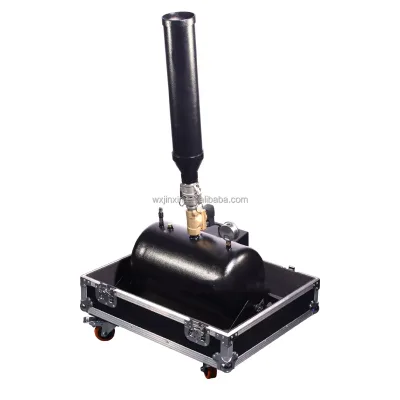
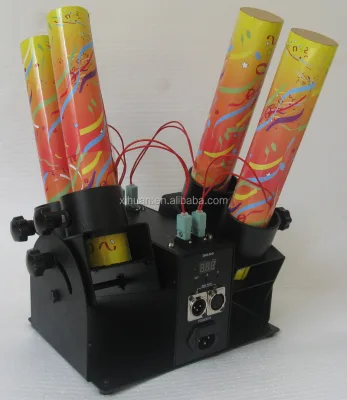
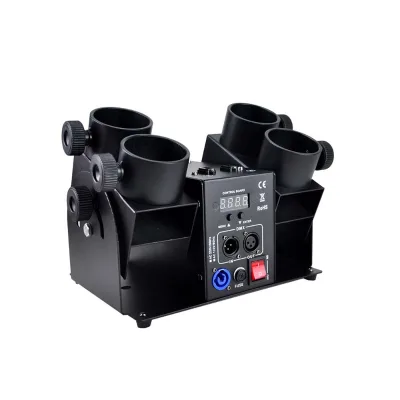


Comprehensive Sourcing Guide
Strategic Sourcing Guide for DMX RGB Confetti Launchers
The global demand for dynamic event entertainment has elevated the profile of automated confetti launchers, particularly those integrating DMX512 control and RGB lighting capabilities. For procurement professionals in the event production, stage design, and venue management sectors, sourcing these devices requires a nuanced understanding of technical specifications, regulatory compliance, and supply chain reliability. This guide synthesizes verified product attributes and industry standards to provide a disciplined framework for evaluating potential suppliers and selecting equipment that meets rigorous operational requirements.
Technical Architecture and Performance Specifications
When evaluating a DMX RGB confetti launcher, the primary focus must be on the integration of pneumatic propulsion with programmable lighting. The core functionality relies on a high-pressure gas source, typically Carbon Dioxide (CO2) or Nitrogen (N2), to propel paper-based confetti with precision. The observed technical data indicates that robust units often feature a power consumption of 1500W, which supports the simultaneous operation of the firing mechanism and the integrated LED array.
A critical differentiator in this category is the lighting configuration. Advanced models utilize a specific arrangement of light resources, such as 12 pieces of 3W RGB 3-in-1 LEDs or 15 pieces of 3W LEDs. These units are designed to synchronize with the firing sequence, creating a visual spectacle where the confetti is illuminated in real-time. The control architecture typically supports both manual operation and DMX512 protocols, allowing for seamless integration into larger stage lighting networks. The DMX512 interface often operates on a 2-channel basis, simplifying the signal routing while maintaining the ability to control intensity and color changes.
The physical performance metrics are equally vital for large-scale venues. The output distance for high-capacity units is observed to exceed 10 meters, with some specifications indicating a coverage range of 10 to 15 meters. This range ensures that the confetti can reach the back of a stage or a wide audience area. Furthermore, the vertical projection capability, or "Sput Height," is a key metric for ceiling installations, with certain models achieving a height of approximately 4 meters. The smoke or mist output, often paired with these units, can reach rates of 20,000 cubic units per minute, ensuring a dense atmospheric effect.
| Feature Category | Observed Specification Range | Operational Implication |
|---|---|---|
| Control Mode | Manual / DMX512 | Enables both standalone use and complex show integration. |
| Light Source | 12-15 PCS * 3W RGB 3in1 | Provides vibrant, synchronized color changes with firing. |
| Output Distance | >10m to 15m | Suitable for medium to large venue stages. |
| Power Requirement | 1500W | Requires stable power distribution; impacts cabling needs. |
| Gas Source | CO2 or N2 | Determines refill logistics and safety protocols. |
| IP Rating | IP20 | Indicates protection against solid objects but not water; requires indoor use. |
Compliance, Certification, and Safety Standards
In the B2B procurement of entertainment equipment, compliance with international safety and environmental standards is non-negotiable. The market data confirms that reputable manufacturers typically adhere to a suite of certifications including CE, CCC, RoHS, and ISO. The CE mark is particularly critical for European markets, indicating conformity with health, safety, and environmental protection standards. Similarly, the CCC (China Compulsory Certification) is essential for products manufactured in or sold within China, ensuring basic electrical safety.
The RoHS (Restriction of Hazardous Substances) directive is a key indicator of environmental responsibility, ensuring that the electronic components, including the RGB LEDs and control boards, are free from specific hazardous materials like lead and mercury. The ISO certification further validates the manufacturer's commitment to quality management systems. Buyers must verify that the specific unit they are purchasing carries these certifications, as they are often prerequisites for insurance coverage and venue acceptance.
Regarding physical safety, the IP (Ingress Protection) rating is a vital specification. The observed data points to an IP20 rating for these units. In the context of electrical enclosures, IP20 signifies protection against solid objects larger than 12.5mm (such as fingers) but offers no protection against water. This strictly limits the application of these devices to indoor environments. Procurement teams must ensure that the venue's environmental conditions do not expose the equipment to moisture or dust beyond the IP20 tolerance, as this could lead to electrical failure or safety hazards.
Cost Drivers and Economic Considerations
The pricing structure for DMX RGB confetti launchers is influenced by several variable factors, with the observed market range spanning from $1 to $780 USD. This wide disparity is not indicative of quality variance alone but reflects differences in build quality, brand positioning, and included accessories. The lower end of the spectrum may represent basic manual units or older inventory, while the higher end typically includes advanced DMX integration, flight-case packaging, and extended warranty provisions.
The Minimum Order Quantity (MOQ) is another significant economic driver. The observed MOQ range varies from 1 unit to 1,000 units. For event rental companies or small production houses, the ability to source single units is crucial for testing and initial deployment. Conversely, large-scale manufacturers or distributors may leverage bulk purchasing power to negotiate lower per-unit costs, provided they can meet the higher MOQ thresholds.
Packaging and logistics also contribute to the total cost of ownership. The product specifications list various packaging options, including carton boxes, flight cases, and wooden boxes. While a standard carton box is cost-effective for shipping, a flight case is often required for professional touring applications to protect the equipment during transit. The weight of the units, observed between 8kg and 12kg depending on the model, directly impacts freight costs. Buyers should calculate the total landed cost, including shipping and insurance, rather than focusing solely on the unit price.
Typical Applications and Operational Context
The versatility of DMX RGB confetti launchers makes them suitable for a diverse array of high-impact events. The primary application is the "Holiday Party," where the synchronization of light and confetti creates a festive atmosphere. The Western style of these devices aligns well with international event standards, making them adaptable for corporate galas, award ceremonies, and music festivals.
The operational context often dictates the specific model selection. For instance, the "dB-Fx01" and "AMD-F01" models, with their specific dimensions and gas capacities, are designed for stage performances where visual impact is paramount. The "dB-Sm01" and "AMD8223" models, categorized under party equipment and supplies, offer flexibility for smaller venues or mobile DJs. The ability to customize the product, as noted in the specifications, allows event planners to tailor the confetti type or color to match specific branding or theme requirements.
The "Paper Blower Confetti Cannon" designation highlights the material composition of the projectile, which is generally paper-based. This is a critical safety and environmental consideration, as paper confetti is biodegradable and poses less risk to stage equipment compared to plastic alternatives. The 2-liter tank capacity observed in some models suggests a balance between portability and the ability to sustain multiple firing sequences without immediate refilling.
Supplier Evaluation and Quality Assurance
Selecting a reliable supplier is as important as selecting the right equipment. The market data identifies "Guangzhou Dbee Lighting Co., Ltd" as a prominent brand associated with these products, with a factory presence in Guangzhou, Guangdong, China. While this specific name is observed in the data, buyers should apply a rigorous evaluation framework to any potential supplier. The presence of a "Factory: Yes" attribute is a strong indicator of direct manufacturing capability, which often translates to better quality control and more flexible customization options compared to trading companies.
Quality assurance should be verified through the warranty terms provided. The standard warranty observed is one year, which covers defects in materials and workmanship. Buyers should scrutinize the terms of this warranty, including what constitutes a claimable defect and the process for repairs or replacements. The "Lifetime" specification of 60,000 to 100,000 hours for the LED components suggests a long-term investment, but this is contingent on proper maintenance and operating conditions.
When evaluating a supplier, procurement teams should request documentation for the CE, CCC, RoHS, and ISO certifications. They should also verify the "Place of Origin" to ensure it matches the claimed manufacturing location, as this affects shipping times and import duties. The "Customization: Available" attribute indicates that the supplier is willing to adapt the product, but buyers must clarify the lead times and additional costs associated with custom orders.
Long-Term Procurement and Maintenance Strategy
For organizations planning to integrate DMX RGB confetti launchers into their long-term inventory, a strategic approach to maintenance and lifecycle management is essential. The "One Year" warranty period is a standard baseline, but the operational longevity of the unit depends heavily on the care of the pneumatic system and the LED array. The "Fuel Consumption Rate" of 9 minutes per liter provides a metric for estimating operational costs and gas refill schedules.
Buyers should establish a maintenance protocol that includes regular inspection of the gas lines, the nozzle for clogs, and the electrical connections. The "IP20" rating necessitates that the equipment be stored in a dry environment to prevent corrosion. Additionally, the "Package" specifications, such as the use of flight cases, should be leveraged to protect the units during storage and transport.
The "Changeable" color attribute of the product suggests that the lighting elements are a key selling point. Over time, the brightness of the RGB LEDs may degrade. Buyers should factor in the potential cost of LED replacement and ensure that the supplier can provide spare parts or replacement modules. The "Model" numbers, such as "DB-ML045" or "AMD8223," serve as unique identifiers for ordering compatible accessories and consumables.
Finally, the procurement strategy should account for the evolving nature of event technology. As DMX512 standards evolve, ensuring that the control interface of the purchased units remains compatible with future lighting consoles is vital. The "2CH" channel specification is a current standard, but buyers should verify if the unit supports extended protocols if their future needs require more complex control. By focusing on these long-term considerations, organizations can maximize the return on investment and ensure reliable performance for years of event production.
FAQs
How is the confetti launcher controlled?
The device supports both manual control and DMX512 protocols for integration. It operates on a 2-channel basis, allowing synchronization with stage lighting systems while maintaining simple standalone operation.
What is the output distance of the unit?
High-capacity models project confetti over distances exceeding 10 meters. Some specifications indicate a coverage range of 10 to 15 meters, suitable for large venue stages and audience areas.
Which certifications are required for this equipment?
Reputable units typically carry CE, CCC, RoHS, and ISO certifications. These marks ensure compliance with safety standards and environmental regulations for international markets and venue acceptance.
Can the product be customized for specific events?
Customization is available to tailor the product to specific event needs. Buyers can request adjustments to confetti types or colors, though lead times and costs may vary for custom orders.
What is the power consumption of the launcher?
The unit typically consumes 1500W to support firing and lighting. This power requirement impacts cabling needs and necessitates a stable power distribution system for safe operation.
How long does the LED light source last?
The LED components have a rated lifetime between 60,000 and 100,000 hours. This longevity depends on proper maintenance and operating conditions within the specified indoor environment.
What is the minimum order quantity for purchase?
The minimum order quantity ranges from 1 to 1,000 units depending on the supplier. Single units are available for testing, while bulk purchases may offer better per-unit pricing.
Where is the manufacturing location for these units?
Products originate from Guangzhou, Guangdong, China, with factory presence confirmed. This location affects shipping times and import duties for international buyers sourcing this equipment.